An alien conversation with an ordinary job description
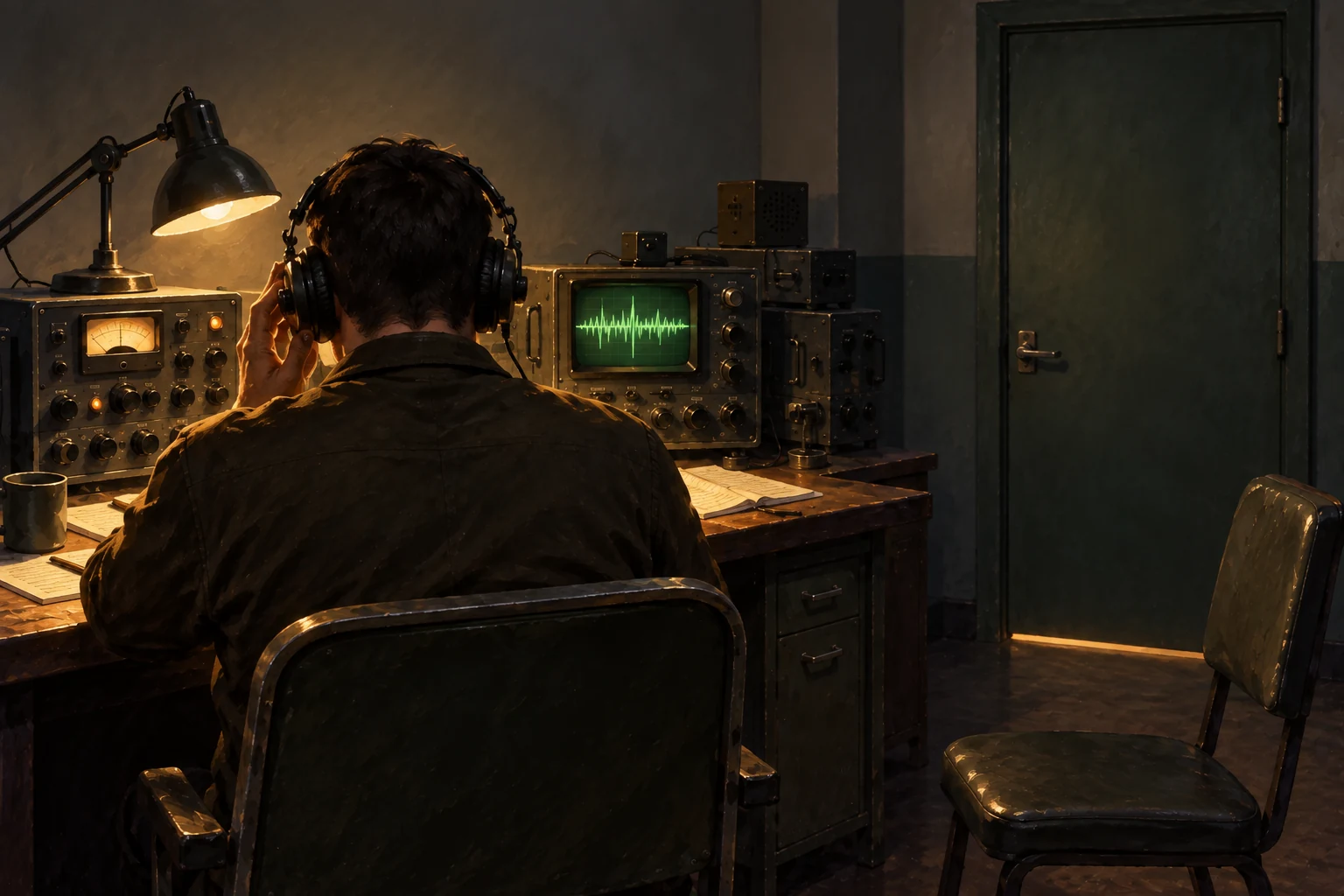
The oddest part of the Dan Sherman story might be how much it sounds like a job. Training, equipment, procedures, messages to pass along. The alleged communications are extraordinary; the work around them sounds organized enough for somebody to complain about the shift schedule.
Michels introduces Sherman, a former Air Force electronics-intelligence worker who claimed he was trained to communicate with nonhuman beings. He recounts Sherman's story of exercises, tones and messages concerning human abductions. Brown hasn't just independently supplied those details. His contribution is that insiders recommended Sherman's book, Above Black, to him as credible, and that its established procedures struck him as significant.
That's the part I'd follow. If the account were accurate, Sherman wasn't inventing a communication method from scratch. He was being trained for an existing role. Somebody would already have decided what information mattered, where it went and what the operator needed to know. I'd be as interested in the person receiving his reports as in the supposed being sending the message.
Michels says Sherman nicknamed two of the contacts Bones and Spock, borrowing from Star Trek. I can see the human impulse there. Faced with something that strange, giving it a familiar name might make tomorrow's shift feel possible. It also reminds me that we're hearing an individual's account of a process, not a transcript that resolves what the process actually was.
Brown connects the story to the alleged agreements. I think that connection needs the same unanswered question at both ends: who benefits from the information? Knowing where an encounter happens could help someone provide support, monitor it, or leave it undisturbed. The existence of a reporting routine wouldn't tell us which purpose it served.
 Veya’s take
Hear it for yourselfWatch this part of Brown’s conversation with Jesse Michels.
Opens YouTube in a new tab at the start of the range.