The ships might be the real story

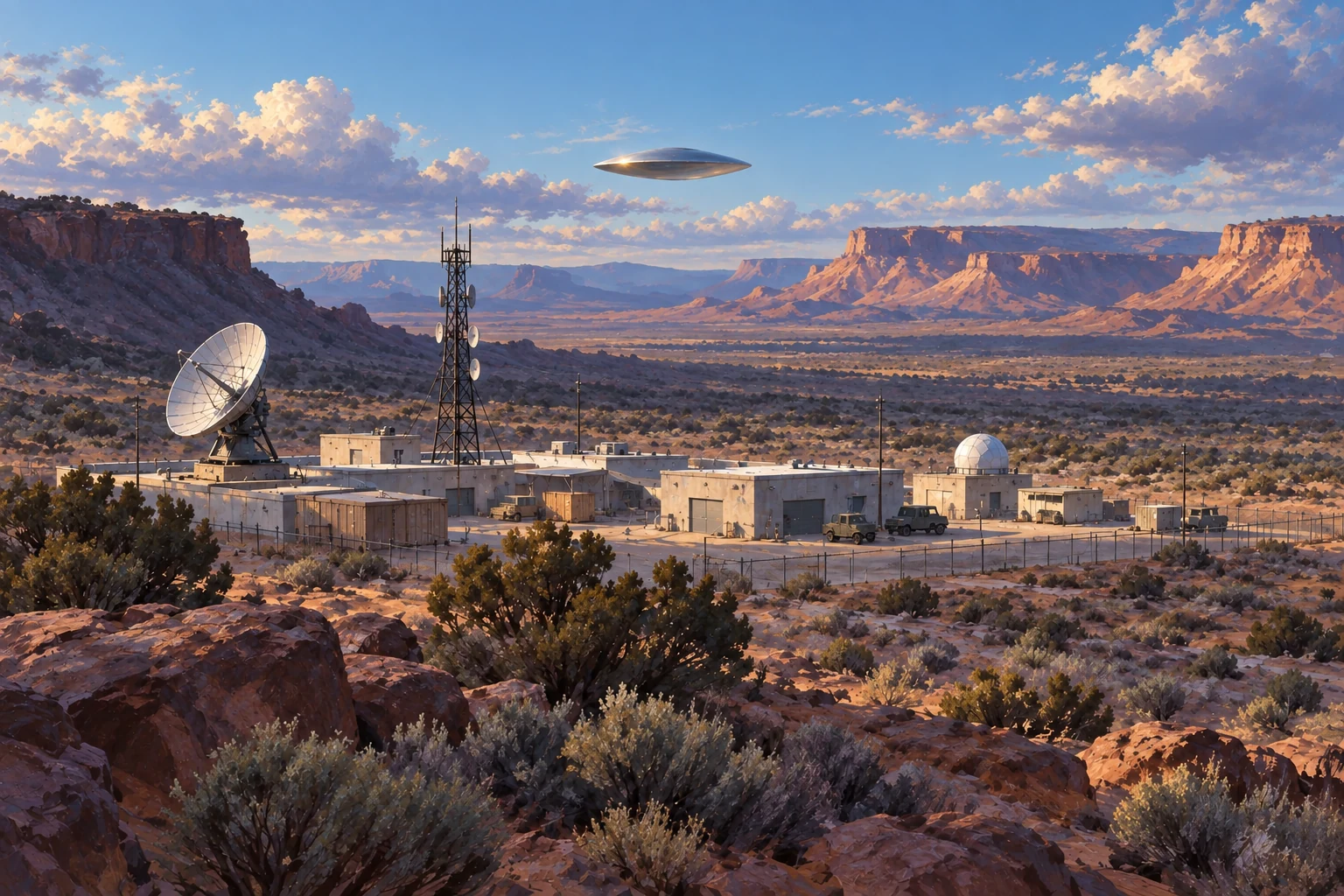
The triangle gets your attention. The possibility that somebody knew it was coming is what keeps mine. Brown describes a briefing about Russian naval vessels with a large triangle appearing close overhead. He says the ships showed no reaction. They had also been there for a while beforehand, and the briefing's analysts concluded they had advance knowledge of the appearance.
Now, if that interpretation holds up, somebody may have known where to be before the thing arrived. That changes what I'd want to hear next. Another description of the triangle would be great, but how did those ships end up in that particular patch of ocean? Was somebody following a pattern, trying to attract it, or acting on information we haven't heard? Each possibility tells a different story about the relationship.
Brown then makes his own move: he suspects a prearranged meeting and floats the possibility of a transfer, perhaps of data. He marks that as speculation beyond the briefing. I think that's the interesting leap to examine. If you can arrange a meeting, there has already been some way of coordinating it. The brief encounter might be the visible end of a much longer conversation. I'd love to know how that conversation started.
He also says the document alone cannot establish that the triangle was nonhuman; advanced human technology remains possible. That doesn't make the waiting boring. It changes who might have arranged it. I'd still want the missing piece before the arrival: how did anybody know to be there?
What could a brief meeting accomplish?An exchange might not require anyone to climb aboard.
The interviewer asks what either side would get from an object appearing and leaving. Brown suggests a transfer instead of a diplomatic sit-down, mentioning data and a possible line-of-sight link. That would give proximity a purpose without requiring anyone to climb aboard. It's a useful possibility to follow, but the briefing doesn't establish that an exchange occurred. We'd need something beyond a well-positioned triangle to choose it over the other explanations.
 Veya’s take
Hear it for yourselfWatch this part of Brown’s conversation with Jesse Michels.
Opens YouTube in a new tab at the start of the range.