Lue Elizondo & Diana Pasulka

Intelligence Brief: Revisited

Why her, and what are we being prepared for?

The angel research is the way in. Then I start wondering about the people who wanted it, what they showed her, and how these conversations might be changing the rest of us.

Wait. They wanted the angel research?
Source date Brief published
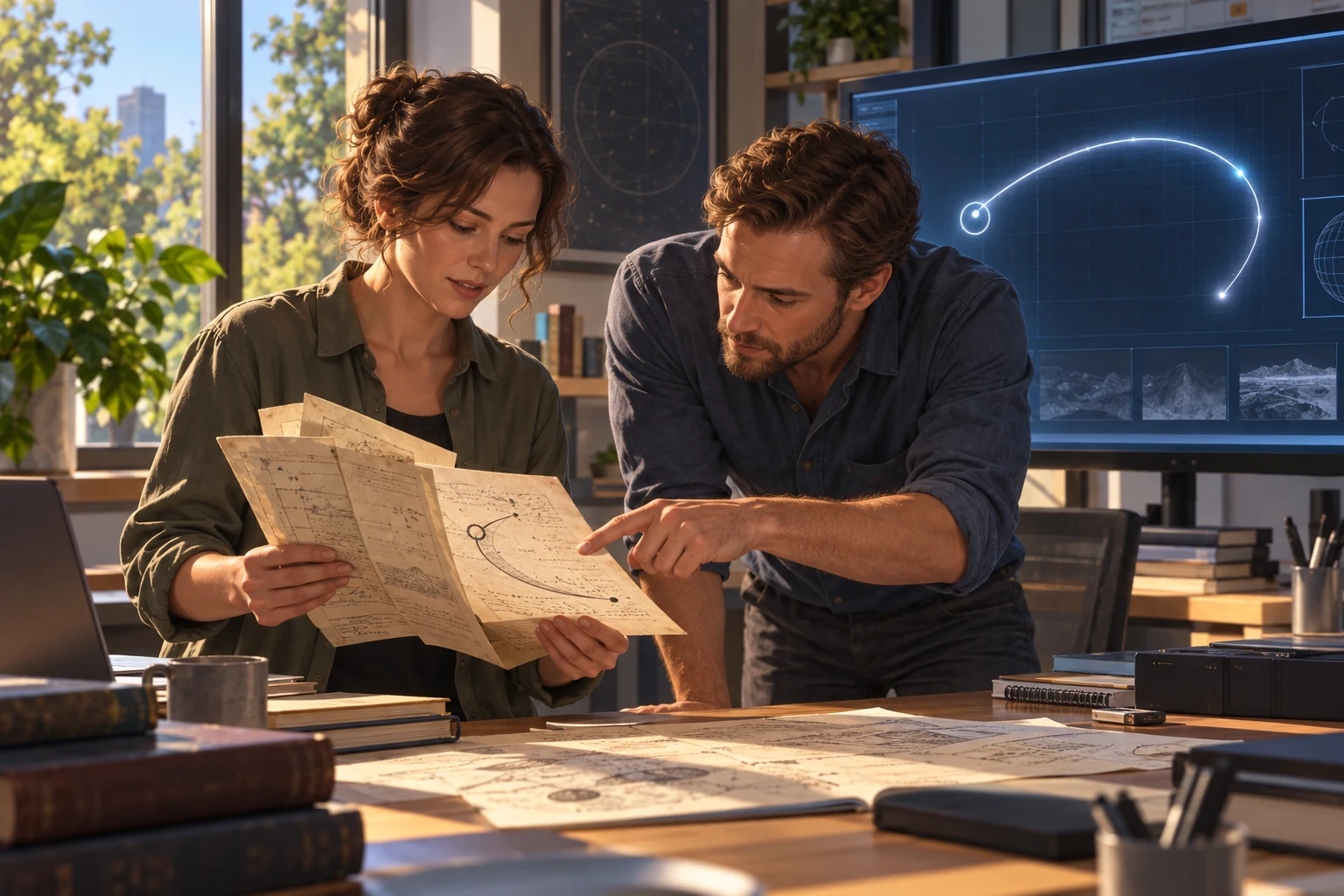
An engineer examines historical encounter accounts brought by a researcher.
Why her, and what are we being prepared for? · Explore the conversation

Pasulka says aerospace engineers reached out because of her work on historical angel-contact accounts.

Bro, what?

She was looking at these stories as a scholar of religion. They were interested in the possibility that the encounters had actually happened. That’s the part I didn’t know, and it makes the whole thing feel different. They weren’t just asking a religious-studies professor what people might think if aliens showed up. They wanted the material she was already studying.

So what did they recognize in it?

That’s where my mind immediately goes. Imagine working on some very technical problem, then reading an old account of an angel encounter and thinking, hold on, we should talk to the person researching this. What is the thing that makes those two pieces connect? A description? Something about how the encounter happened? Something the person was supposedly told?

Pasulka says the correspondence eventually led to a meeting and a trip to New Mexico with scientist Garry Nolan. Knowing what initially drew their interest makes that access even more intriguing to me. Why her, why that material, and why show her what they showed her?

It could be a sincere attempt to understand something their own field doesn’t explain. I actually find that possibility pretty rad. Somebody who knows the history of an account might notice a detail that an engineer would miss, just as the engineer might see a different implication in the same description.

But I also wonder about the intention behind the access. If you choose the researcher, choose what they see and know they’re likely to write about it, you have some influence on the story that reaches everybody else. You don’t have to write the book yourself.

That doesn’t tell me a government arranged the whole thing. It does make me want to hear the other half of the conversation—the part where someone decided, yes, this is the person we should bring in.

And now I’m stuck between two interesting possibilities. Maybe religious scholarship contains observations that technical people recognize. Maybe that expertise also makes her especially useful for introducing a certain way of understanding the phenomenon. Those could overlap. A real mystery doesn’t prevent somebody from having an angle.

An angel scholar’s work caught the attention of aerospace engineers, and I still want to know what they were seeing in those accounts when they first opened that email.

Veya’s take
Hear it for yourselfWatch this part of Elizondo and Pasulka’s conversation.

Opens YouTube in a new tab at the start of the range.
Okay, now I want to rewatch City of Angels

Source date Brief published
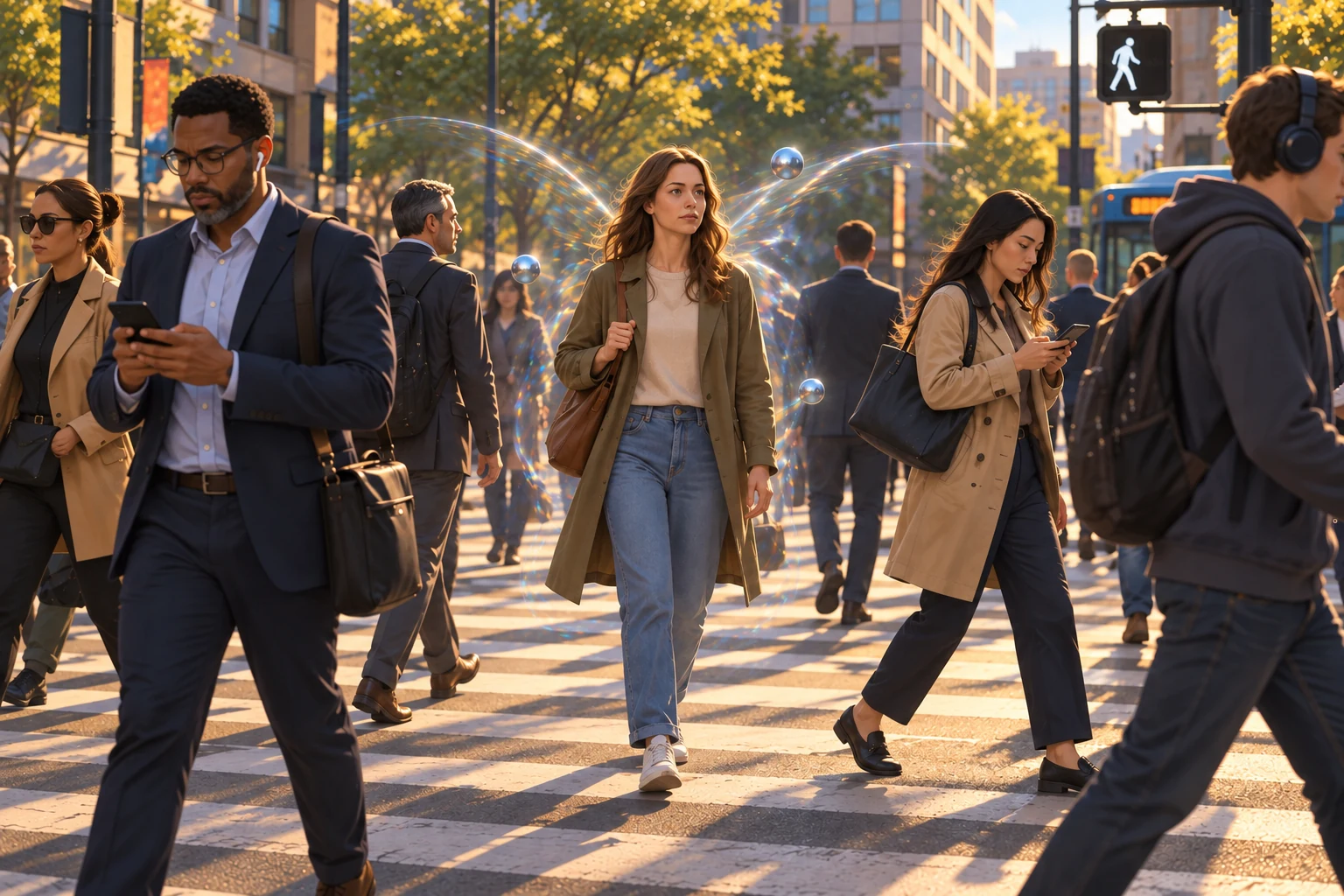
An incognito figure with faint orbital refractions walks through an oblivious city crowd.
Why her, and what are we being prepared for? · Explore the conversation

I liked City of Angels when I saw it. Nicolas Cage is an angel, he falls in love with a human woman, and you have this idea of angels existing around people who don’t necessarily know they’re there.

Back then, that was comfortably a movie thing. Interesting premise. A little out there. Move on.

Now I’m listening to these conversations about non-human intelligence, spiritual interpretations and beings possibly existing alongside us, and I’m thinking, holy shit, that movie feels different now.

Whether you like Nick Cage or not. We can work around that.

It’s the premise that gets me: something could be here, interacting with our world, without announcing itself in a way everybody recognizes. Maybe it looks ordinary to us. Maybe the categories we’ve inherited don’t describe it very well.

You know what I mean? You watch the same story, but now there’s a possibility in it that you don’t dismiss quite as quickly. That’s a weird little shift to notice in yourself.

Pasulka describes a much bigger version of that. She says this work changed her understanding of reality, and she doesn’t sound like someone who simply added UFOs to a list of research interests. Even when she talks about “vehicles,” she leaves the question of what they really are open.

The image that comes to my mind is an ordinary crowd with an incognito presence moving through it. Everybody is going about their day. Someone walks right past. We can see a hint of something unfamiliar around this person, but nobody in the scene reacts.

That’s trippy to me. The whole street could feel different if you knew one thing about one person in it.

And then I catch the other part of my reaction. These conversations are making me more open to that possibility. What if that is part of somebody’s intention? If the phenomenon is being introduced through religion and spirituality, perhaps the framing helps people get used to it. Or perhaps people are finally finding language for something they had dismissed.

I don’t know which, and that’s why I find my own reaction interesting. I can be suspicious of how a story is being presented and still feel the possibility underneath it getting harder to shrug off.

So yes, I want to rewatch the movie. I want to see which parts land differently now. That old “well, that could never happen” reaction doesn’t feel quite as automatic anymore.

Veya’s take
Hear it for yourselfWatch this part of Elizondo and Pasulka’s conversation.

Opens YouTube in a new tab at the start of the range.

Who is getting us ready for this?

Source date Brief published
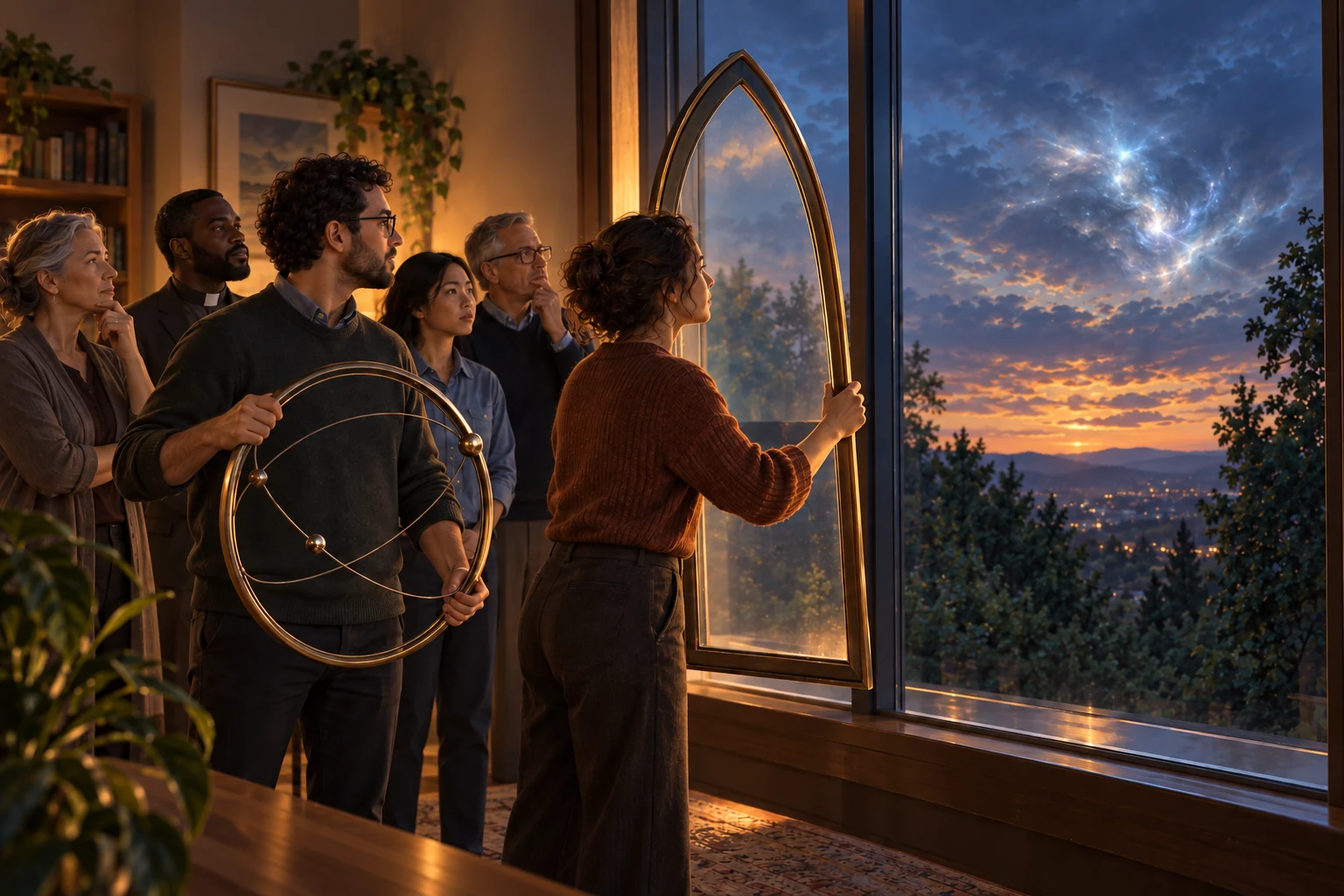
Community figures consider an unfamiliar light through competing transparent frames.
Why her, and what are we being prepared for? · Explore the conversation

Elizondo says he is bringing religious leaders from different traditions into these conversations. He mentions plans to return to Italy, speak with members of the Vatican and visit leadership in the Middle East in the following months.

Okay, so this is more than “somebody should probably think about it.” He’s talking about going places and having these conversations.

His reason is pretty direct: if government acknowledgement came tomorrow, what would it do to people? He says we shouldn’t wait until then to start thinking about the impact.

Now that we’re revisiting the interview, I want the follow-up. Did those visits happen? What did they discuss? Did anything come out of it that people can actually turn to? I haven’t found a clear outcome that answers those questions.

And I can see why that support could matter. If something happens that changes your whole picture of reality, you might want somebody you trust to help you talk through it. Especially if the first place your mind goes is, “How does this fit with everything I’ve believed?”

But imagine being in one of those rooms. What are people being asked to prepare for? The shock of discovering another intelligence? A challenge to a religious belief? Or the possibility that something described in religious accounts is turning up under a different name?

Those conversations could go in very different directions. That’s what makes the Vatican and Middle East plans catch my attention. Who hears what, and what explanation do they carry back to their communities?

This connects to my question about Pasulka. Aerospace people want an angel scholar’s research, and here we have Elizondo talking about bringing religious leadership into the discussion. That overlap is interesting as hell to me. It could reflect sincere attempts to understand the same problem. I still wonder how much the way people introduce it shapes what everyone else becomes ready to accept.

The hosts even ask whether he’s forming a new religion, and Elizondo warns about the risk of a cult. I’m glad that comes up, because, come on—you can see how we got to that question. He says that isn’t what he wants, and later argues that people should keep their own ability to interpret this.

So I’d like to hear the next conversation, if those trips and meetings went ahead. Tell us what surprised people. Tell us what they disagreed about. Did “getting ready” become anything more specific?

Hear it for yourselfWatch this part of Elizondo and Pasulka’s conversation.